Do you like my blog?

2leep.com
------------------------------------------------------------------------------------------------------------------------------------------------
First time on my blog "Unblock Blocked Site"? Learn more to Unblock Blocked Site with the help of different software.


Subscribe to blog updates by Email or RSS

Each week you will get news related to the topic of blocked sites unblocking . I promise you, my dear reader! Or you will unsubscribe :-)

Firstly, look at my 7 ways to unblock blocked sites. You will like it.
-------------------------------------------------------------------------------------------------------------------------------------------------
Showing posts with label Russia. Show all posts

Putin signed the “Kabaeva’s law” that introduces the new bans in the Internet

Vladimir Putin proved Kabaeva’s amendment to act that prohibits leaks about children in the Internet.


The president of Russian Federation signed the law that prohibits publications in Media of any personal information about under-aged victims of crimes. Earlier this law was going to concerne only victims of pedophiles. The law was initiated by deputies Alina Kabaeva, Valentina Tereshlova and Marina Mukabenova. Internet-community took it as one more attempt to sensor the Internet.

The amendment to law “About Media” had been accepted by the government on March 22 and approved by the Federation Council on March 27. Law prohibits the spread of information bout under aged victims of crimes, including surnames, names, middle names, photos and videos of the child and his parents, date and place of birth and study or work or another information that can help to determine their personality.

If the publication of such information can occur as a protection of victim’s interest then journalists have to get the permission from parents or even a child (if he/she is 14) to public personal data. Without their permission journalists can act only when "it is impossible to obtain their permission, or if the legal representative of the minor is suspected or accused of committing these illegal acts."

Initially it was planned that the law would only create "a serious obstacle to the unwitting" promotion "through the media of pedophilia and other crimes committed against the sexual integrity of minors", but in the final version the law sounds more extensively and for the "victims of the unlawful action (or inaction).

"It made lawyers criticize Kabaeva and other members of the legal illiteracy, and the online community has suggested the bill about another taboo subject, censorship and expanding the "registry of banned sites."


Liked this post? Why not to Subscribe to Unblock Blocked Site news by Email for FREE

“We do not work with censors”


American Jimmy Wales, the one who founded Wikipedia commented in not a very good way the Russian Federal Service for Supervision in the Sphere of Telecom, Information Technologies and Mass Communications (ROSKOMNADZOR) actions that included the Internet encyclopedia in the blacklist of sites and demand to change or delete more than 10 articles on Russian and English languages. Earlier Wales not only refused to change something in these articles but he also announced that “it is better to block than to let someone to censor”.
«С цензорами не сотрудничаем»
In the response to “Moskovskie Novosti” question “Doesn’t it better to delete one article instead of depriving millions of people from access to information?” Wales said: “Maybe it is be better for government to stop its foolish campaign that blocks the access to articles from the encyclopedia for people who love it”.

The founder of the Wikipedia is doubt, that his encyclopedia will be closed in Russia. “No one can be so silly to block the whole encyclopedia, introducing by such actions censorship on the fundamental information”, - answered Wales.

If talking about Russian version of Wikipedia, where there is information about Cannabis in one of publications, and that became the reason for Roscomnadzor decision, Jimmy Wales noted that “the better way to fight with drugs using is to spread the information about how it is dangerous”.

He told about “main principle” of his brainchild – not to work with censors. And made an example: “We were blocked in China during several years until they understand everything and started to block only certain pages, instead of the whole site. We still do not help them in such actions, but we cannot prohibit them to infringe interests of their own nation”.

He also noted that the Wikipedia policy is based on the fact that all the articles should be neutral, and Russian Wikipedia is not exclusion. “By the way, concerning placing of disputable materials, Wikipedia is guided only by laws of Florida, USA where our servers are situated.

Liked this post? Why not to Subscribe to Unblock Blocked Site news by Email for FREE

The Internet censorship in Russia

103 criminal offences of network’ users, 208 facts of administrative burden and 609 cases of access limitation was registered by legal annalists of inter-regional human rights association “Agora” in 2012. They registered 47 cyber attacks per year, 27 civil claims concerning bloggers and 49 politics and authorities offers of Internet regulation. In comparison, in 2011 it was registered 38 criminal offences, 173 acts of administrative burden, 231 cases of access limitation, 31 cyber attacks, 11 suits and 5 net regulation offers. The total amount of Internet freedom violation comparing with the last year raised almost on 2.5 times (500 - in 2011, 1197 - in 2012).
It was for the first time when the Internet started to be considered by the Russian government as a source of the threat of its wellbeing and stability. It was indicated by the increased number of limitation cases and offers of Internet regulation none of which do not include freedom guarantee but was aimed at straightening of the control and introduction of new types of censorship, as it was said in the “Russia as a global threat for the free Internet” report published by the “Agora” Association.

It was registered a big increase of cases concerning Internet freedom limitation by the Russian authorities that can be seen practically in all areas. Besides the report analyses crimes against bloggers and Internet-activists and also the investigation of these facts and Internet-censorship.

2012 became critical for the Russian Internet which quickly leave the periphery of political life, demonstrated the great opportunities for the self-organization of active citizens, and thus attracted the attention of the authorities. The closest fight for free Runet is going to be in spring when in the spring when the Duma scheduled a discussion of the law “About the Internet” - forecast in the report the legal analysts Association Agora.

Human rights activists say that in comparison with the last year the number of federal subjects, in which the Internet right is systematically limited have increased. In 2011, there were 35 subjects, in 2012 - 38. Meanwhile, the number of subjects in which users are experiencing pressure ( violations highlighted on the map in red color) increased from 4 to 9.


Liked this post? Why not to Subscribe to Unblock Blocked Site news by Email for FREE
Moscow schools will have Free Wi-Fi with censorship


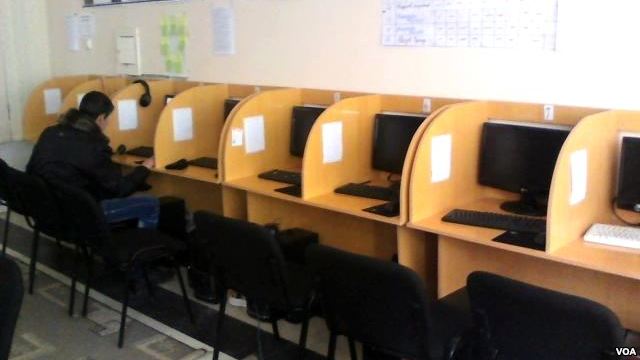
JSC “Moscow city telephone network” won the Moscow Department of Informational technologies competition on organization of 3 thousand wireless Wi-Fi Internet connections in Moscow schools. This system will filter the schedule that will limit the access to prohibited resources and sites that offer illegal help for students to make their exams and tests as it was reported by the company’s press service.


“Wi-Fi will give teachers more opportunity for using digital educational resources. It is very important that each school can make it’s own access”, - said Aleksandr Gorbatko, the department’ deputy administrator. 

The Wi-Fi will be spanded in educational institutions till the ens of February 2013. A state contract was concluded on 2 years. Today Moscow Department of Informational technologies provides Internet for 4,5 thousands of schools. Also according to the state contract the department will place in schools 6 thousands of security cameras.
Liked this post? Why not to Subscribe to Unblock Blocked Site news by Email for FREE

The Kremlin, government and State Duma write a new law about the Internet

The conception of a future Internet complex law is being considered now by the President's administration and in April it’ll be represented to the world for public discussions. It was reported by the member of the State Duma “Moskovskiy Komsomolets” information policy, informational technology and connections committee Robert Shlegel: the information is confirmed by other committee’ deputies. Questioned “MK” experts and oppositionists afraid of censorship toughening, but they hope that it is impossible to wholly regulate World Wide Web.


According to Robert Shlegel, government, Duma and Presidential Administration reached a consensus: there will be the Internet law. “Now there is a documents’ preparation on the conception level and it is being considered by the President’s administration, - told parliamentarian. Further in April a groundwork will be presented and we will carry out a public discussion. If it will suit everyone then it will be passed. Shlegel assure that this law passing will be in this order.

The deputy said that the law will concern mainly the technical issues. “We need a conceptual mechanism. In a less degree it will deal with blogs and in a more degree - providers, hosting, access, data saving”. Besides the law will make the online use of off-line criminal administrative regulation easier. And this is the situation when the repressive measures will be aimed at blogers. “As a person who always receive threats and outrages in the Net I would like to to recover damages”, admit the member of the “Yedinaya Rossiya” Party. “I do not pay attention on abusive words in Twitter, but outrage is an offence”, - supports him a colleague Vadim Dengin. He told “MK” that Internet became the “territory of cyber crime”.

The preparations will be carried out by Russian Parliamentary Internet Party, that opened 83 portals in each region of the country for offers’ collecting. The representatives of the opposition do not expect anythin good from this law. “I have a suspicious attitude towards everything that is developed by the State Duma. There are always some tricks”, - said the member of “Spravedlivaya Rossiya” committee Andrey Tumanov. However parliamentarian optimistically thinks that the idia to regulate the Net will fail, because “the Internet is more powerful and will find other ways to avoid deputies’ limitations”.

The member of Communist Party and at the same time the active bloger Andrey Klichkov has a similar point of view. He remind that this idea had been discussed earlier with the representatives of different parties. “It was decided then that it is impossible to regulate the Internet because it is easy to avoid limitations”, - said communist. 

The ways to avoid blocking were demonstrated by the online encyclopedia “Lurkmore” that had been included in the blacklist of sites this autumn. 

The representatives of professional community look at the matter more rationally: they do not afraid censorship but at the same time do not feel any necessity for a conceptual mechanism”.


Liked this post? Why not to Subscribe to Unblock Blocked Site news by Email for FREE
Russia will not get the sovereign right to regulate the Internet

ITU ( The International Telecommunication Union) published the regulations text, that had been signed by the countries-members of this Union at the conference in Dubai. This regulation had not been changed since 1988 and it was expected that it will include several points about the Internet in the future. A number of countries, including Russia offered to allow ITU countries, according to this document, to regulate domain data and addresses in their countries. China, Iran, Sudan, Saudi Arabia, Alger, Bahrain was Russian allies, but their offer faced with a serious opposition.

“New regalement offers countries to develop their position according to the Internet question, it means technical issues and ITU state policy”, - said the press service of Russian Ministry of Communications on Friday. The resolution of ITU members charged MC general secretary with taking measures to allow RMC to play an active role in broadband communicating and Internet model developing, as it is said in the report. “The paragraph 3.8 reflects and juridically consolidate current situation in this sphere”, said the MC representative, “but the delegations from Canada, Australia and several other countries didn’t agree with it”.

The offer to give rights to national Internet regulating caused a kickback among the trade members. Google accused some countries of the intention to “get the Internet control”, that will cause( according to their opinion) a censorship. Though, during the conference Hamadoun Touré the MC general secretary said that the matter is not about the Internet contents controling and the Internet governance. The document is oriented on technical standards development for International telephony. It is not right to consider the ITU conference as a discussions of the Internet freedom, proves Andrey Kolesnikov, the president of the Coordinating Internet Domain Centre.

According to the information from Russian ministry of communications more than 100 countries signed the regulation. But the USA, Australia, Canada and a number of EU countries didn’t agree with this regulation, despite the most arguable articles about the Internet have been excluded. Countries that didn’t sign the contract will not follow this recommendations concerning issues about roaming, Internet etc.


Liked this post? Why not to Subscribe to Unblock Blocked Site news by Email for FREE

Russian Internet does not afraid of censorship


The economic of Russian Internet raise the grows rate and its influence as a media channel becomes stronger. RAEC sets a price for a value of the Russian Internet as a several bln dollars and prognoses its increase by 30% in 2012.

2012 discovered a new phenomenon in Russia - the state, for the first time was interested in the Internet sphere. And the first measures concerning this were prohibitive. So, due to this a law about child security from the Information, that provide the creation of the blacklist of sites and blocking illegal content in the Runet.

The first question was about the overall results of the Internet of the current year and also about the “child security from the information” law. In whole, experts pointed out the unavailability of the infrastructure to execute a law and the ambiguities in the questions concerning a content marking and blacklist.

According to experts points of view the main value of this law is that parents began to pay more attention on what their children do in the Internet, said Yuri Sinodov, the chief editor of Roem.ru. He also explained that this question is far from real problem of business. And this is very good that this law isn’t used as a mechanism to pressure business.

It is essential that a part of Internet users are worried about the “law of the Internet”, which deputies are going to make by the next year and of course users afraid of the Internet censorship. So, how tough will be the Internet control?

Generally, the representatives of this sphere do not deny the possibility of a “soft Chinese variant” of the Internet censorship. But also they consider this way as an unlikely but although a possible one .

Oleg Seidak, the head of the FINAM Global fond noticed that “Russian Internet is characterized by more technically educated and mentally active users groups. And right this groups are the main users of the information that can be prohibited by the state regulation.

I think that active and mass State actions towards the limitation of the access In the Internet can lead to a great increase of the users awareness of the ways to avoid this limitations that will have a wholly opposite effect that was not expected.

The state can close this technical possibilities only by using the Chinese variant, that means not only blocking access to the certain information or resources but also a blocking of a part of ways that allow to avoid such blocking. However this method is too cruel and this can cause the “arm race” between Internet users and a state, that none of the countries can win without destroying the Internet at all”, concerning the current situation.


Liked this post? Why not to Subscribe to Unblock Blocked Site news by Email for FREE

Censorship on the Internet: It is known to house where the "black list" of sites

Finally it became known where Roskomnadzor will post the list of banned web sites in Russia. As the representative office, the zapret-info.gov.ru portal can find not only the "black list" of prohibited Internet sites. The portal will control calls receiving. To complain of illegal information on zapret-info.gov.ru will be elaborated in the electronic form. And, users can leave their complaint anonymously, without registration.
Роскомнадзор разместит список запрещенных сайтов на ресурсе zapret-info.gov.ru.
In the registry on zapret-info.gov.ru a copy of pages of banned sites will be attached, and have a page of the site with illegal domain name, as well as the basis on which the site was recognized as "illegal."
Roskomnadzor will post a list of banned sites on zapret-info.gov.ru resource.

With the fighting and disturbances in social networks. It became known that the "Odnoklassniki" is ready to ban all pedophiles.

Liked this post? Why not to Subscribe to Unblock Blocked Site news by Email for FREE

The Censorship age

Dear readers, in this article another innovation will be discussed. Some of the materials like "Home Newspaper" are marked by special signs "+" denoting the age at which you can not read the aforesaid articles.
These rules dictate a new federal law "On the protection of children from information harmful to their health and development", which comes into force on September 1 of this year. It was signed for the first time on December 29, 2010 almost two years ago. Probably, it was assumed that during this time some techniques will be developed , according to the publisher. But! The law comes into force this week, but there are no methods or at least a recommendations how to use this law.

The formulation of the law is so strange that the category of "6 +" for example, old Russian tales have a description of the physical and mental violence ..." - according to a quote from the Federal Law № 436), under the "12 +" gets a harmless (it seemed of course!) "Gingerbread Man" (that shows the process of loss of life), and almost all the work of Korney Chukovsky would have to be marked with the sign of the most stringent "16 +" …

No doubt, in the sea of ​​information, where everyone dip our children, there are so many ... (I almost said the word, that instantly sends this phrase in the category of "16 +") ... excrement, that the adoption of the law was necessary and justified. The lawyers of our newspapers couldn’t find someone who would be able to describe the algorithm of the application of this law.

And another aspect of the double-meaning of the law: when I was young, as they say today, a teenager, the writings on a movie "Children under 16" even more fired my imagination. And I, by any means was trying to see it. Whether will the introduction of this law will have the opposite effect? Would not it made a child to start searching on the Internet a string of characters "16 +"?
16 +


Liked this post? Why not to Subscribe to Unblock Blocked Site news by Email for FREE

Censorship and the procedure?

On September 1, the law that is going "to protect children from information harmful to their health and development," comes into force and along with this TV producers made a lists of "forbidden words."


TV stations began to warn in advance of the company-producers of content on the inadmissibility of the use of their products in a number of words and expressions, stressing that the use of taboo language is unacceptable, and the widespread nowadays.

Along with taboo language there were words like “penis” or "prick", "muhosranske", "hell", "ass", "hemorrhoids", "gay" (and its many aliases, including "blue" ) and others.

In July, the National Association of Broadcasters has asked the State Duma Speaker Sergei Naryshkin to postpone the adoption of the law at least on a year, but it doesn’t have a success. "The law contains a large number of subjective and highly controversial provisions, and the fact that the mechanisms for the implementation of the major provisions of the law are not clearly defined, and the by-laws, to which there are links, not yet adopted, we consider it necessary to postpone the introduction of the law in force for a period not less than one calendar year, "- Sergei Naryshkin said in letter.

In addition, broadcasters pointed out that in the current version the law will forbid children to see, for example, most of the military-patriotic films, "The Adventures of Tom Sawyer" (in the film vagrancy romanticized is shown) and "Just you wait! "(Wolf constantly smokes).

Liked this post? Why not to Subscribe to Unblock Blocked Site news by Email for FREE

120 years ago, Russia was introduced "punitive censorship"

August 27, 1882, Emperor Alexander III introduced the "Provisional Rules on the Press."

Rules finally secured in Russia "punitive censorship." Under the rules, the publication after the third warning had to represent the next available number in the censorship on the eve of their release. State had maximum control over the press, up to the right to close all editions and deprive them of the editor and publishing right. Development of the first edition of the Rules.The right to close any publication was given not only to the Minister for Internal Affairs but also to the Head of the Synod. Control of the press belongs to the High Commission for the Press - a special body of the four ministers: Education Minister, Minister for Internal Affairs , Minister of Justice and the Head of the Holy Synod.

Strengthening of censorship led to the mass closure of periodicals in Russia.

For the time of the Alexander III reign 72 books was banned (among them were Leo Tolstoy, Leskov works).

Liked this post? Why not to Subscribe to Unblock Blocked Site news by Email for FREE

Censorship on the Internet: In Tomsk sites, considered as harmful for children were closed.


The decision to close Internet resources was taken to court.

Цензура в Интернете: В Томске закрыты сайты, вредные для детей

In Tomsk ISP has an access to 13 sites, that had instructions for suicide, violence and pornography. Information about this appeared on the website of the General Prosecutor's Office on Tuesday, August 21. The decision was taken to court. such providers as Tomsk Branch of OJSC "Rostelecom", Center "TUCSR-Telecom" Company "Tomtel." execute the decision In Tomsk.

В Томске суд обязал провайдеров закрыть 13 сайтов, содержащих порнографию, сцены насилия и рецепты суицида

Among the Court's material on the blocked sites it can badly affects the "spiritual, moral, mental, and other development of children."

The access to this sites were blocked by filtering IP-addresses.


Liked this post? Why not to Subscribe to Unblock Blocked Site news by Email for FREE

Register with the banned sites information is likely to be closed

The Joint Working Group of MPs, representatives of the Ministry of Communications and online community discussed the regulations that are necessary for the entering into force of the mechanism of blocking access to sites with prohibited materials.
Yes we ban! (Photo <noindex> <a target=_blank href=http://www.behance.net/gorkemkeser> Gorkem Keser </ a> </ noindex>.)
Yes we ban! (Photo Gorkem Keser .)


State Duma has already approved this initiative. Aims are to "fight against illegal content on the Internet" and protection. In a single register should be made web-based resources for prohibited content: promotion of narcotic and psychotropic substances, child pornography, appeals to suicide, etc.

The federal executive body authorized by the Government will be able to include the list of sites. The new law provides blocking Internet resources by hosting providers and operators of domain names and network addresses. In the second case off instead of one page, and the site as a whole, which could lead to the unavailability of entire web platforms, social networks, etc.

Remains an open question whether the "black list" should be public or private: market participants disagree. The registry should be accessible, otherwise it will not struggle with illegal sites, but on the contrary, their advertising - this is the position of the expert community and the Ministry of Communications. And there must be a public monitoring of the decisions to accept this or that information illegal.

On the other hand, the record does not allow monitoring of its formation - in particular users. Do not exclude the possibility of the "black list" will be closed from the web audience, but is open to operators, hosting providers and Internet companies, who in this case have the ability to track changes in the registry to remove lock from the sites or delete the illegal content .

Mechanism of public control should be possible to verify why this or that resource is not available. This should be a system service like domain name registrars, experts say. It is also asked to create a system for automatically request forwarding, that will redirect the user to a page that explains why the address has been blocked.


Liked this post? Why not to Subscribe to Unblock Blocked Site news by Email for FREE

The network will be a secret censorship


"Черные списки" сайтов в рунете будут закрытымиBy itself, the Russian policy is a serious distortion of a common sense and essence of the political process. Still less to fear of government interference, when it is held under the auspices of protecting public morals. It is now known that the so-called "black lists of sites" is in a secret. The public can not get to them a free access, which means that there will not be an adequate civilian control over the censor materials.
Implementers of the "On the censorship on the Internet" law , in turn, explain that some public organizations will have the access to the lists .Knowing the Russia specifics, when, under the auspices of NSO hide close to the bureaucratic system fraudsters and extortionists, such explanations can not calm, if we're not interested in creating new jobs for loafers. Risk of doing business in the Russian segment of the web has increased significantly. Alternatively, the I2P network , has not yet developed to create a fully-controlled Internet able to compete. One can only hope that further budget cut of the money thing will not really go down.

The most interesting thing in all of these initiatives is the lack of a public debate. The bill falls on the people’s heads at once, but they can not affect it in any way. As a result, expenditures budget, cost more than accounting services. All this will not bring any apparent profit for the economy. At the same time a goal "moral protection " - is unlikely to be achieved, because if a person is already interested in drugs, suicide and porn, complicating access to the necessary information will hardly abate this interest, on the contrary, will give more incentive for criminal behaviors.

Power in Russia is trying to replace a principle that parents are the main caregiver of any child. The state is unable to restore order in those areas of life in which it has to be restored. Why should we give the right to extend state authority? Let restore order there.

Unfortunately, we do not ask these questions to our bureaucrats. They have forgotten how to communicate with Russian citizens in. They are more interested in cosmic importance projects and in any stupidity.


Liked this post? Why not to Subscribe to Unblock Blocked Site news by Email for FREE

Bayonet equivalent to a Pen


Nikolai Ulyanov Photo
Belarusian society in shock. Last week in Minsk made a number of actions to intimidate the independent media. The piquancy of the situation makes the fact that all this happened simultaneously with the appointment of the date of parliamentary elections, before the adoption of the EU decision to extend economic sanctions against Belarus. As the recent history of this country, the next step will be subordinated to Alexander Lukashenko to the Russian request for financial assistance.

Journalist arrested in Grodno - special correspondent of the Polish "Gazeta Wyborcza" Andrei Poczobut. With regard to his criminal case under Part 2 of Art. 367 of the Criminal Code (defamation of the president, the perfect person previously convicted of defamation or insult). He faces a sentence of restriction or deprivation of liberty for up to five years.

The reason for the prosecution began its article on the site "Charter 97" and the "Belarusian partisans."It was said in them about the inconsistencies in the case of an explosion in Minsk subway, on which the spring had been shot by two men.

It should be noted that a year ago Poczobut has been convicted of Part 1 of Art. 367 of the Criminal Code (defamation against the President) for his critical articles against the government. Then he was sentenced to three years imprisonment suspended for two years. However, as we see their work Poczobut did not stop and now he faces is a real term. Moreover, it is worth emphasizing that in the texts of Andrew did not have anything that is not in his other articles critical of the government counterparts working in Belarus.

Almost simultaneously with the arrest of the Belarusians and others sounded alarm bells. Were sentenced to 15 days of journalists "ERB", the authors report about that, it turns out, easily get by with a big bag in the subway route a suspected terrorist can be now. The grounds for the arrest of members of the media? Standard - allegedly using foul language.

Then the special correspondent of the Russian "Novaya Gazeta" wife of former presidential candidate Andrei Sannikov, Irina Khalip a mailbox planted a severed chicken head, sealed in an envelope. Anyone who thinks that there has been someone's self-indulgence, not a threat, it would not hurt to learn about the conditions in which to work Belarusian journalists who refused to cooperate with local authorities.

I remember as far back as 1995, Alexander Lukashenko, shouting from the parliamentary rostrum: "Journalists foreign radio and television, get ready and leave for Moscow. No one gave you the right to immediately inflame." Back then there were those who had become hysterical "young president" vizvala laughter. "Do not laugh, laugh, and then be too late" - the governor promised. And he has carried out its own specific, these promises.

Contrary to the Constitution, in which there is a ban on state-run media monopoly, financed from the budget (that is, all citizens of the country), TV and radio channels, newspapers, magazines, closed to any criticism of the authorities. As for the non-social - political media, the fingers of one hand too much to list them. In particular because of their closing actively worked Lukashenko subordinate prosecutors.Brutally murdered journalist Veronika Cherkasova, who worked on the topic of Belarus arms deliveries to Iraq under Saddam Hussein. "Disappeared" Zavadsy. Some time before this "disappearance", he and his colleague Pavel Sheremet spent months in jail. According to the official version - for illegally crossing the border, according to unofficial - for a report on its transparency.

Actually, all 18 years of Lukashenka's rule "unfair" (as he puts it), reporters do not have to be bored. But perhaps the most dramatic in their life was December 19, 2010, the day of the next presidential election.Then in an unprecedented mass protests have been broken by unknown number of glasses at Government House, and mass arrests began. It is noteworthy that the lion's share of those arrested then - people who write. Some were more fortunate, some less. Poet and journalist Vladimir Nyaklyaeu, journalist and political analyst Alexander Feduta, a journalist Khalip after several months in prison sentenced to a suspended sentence. Writer and journalist Paul Sevyarynets sent to the "chemistry". The editor of the "Charter 97" Natalia Radina was forced to flee abroad. Here they are - "thugs", it is clear that none of them on video with the memorable massacre there.

And here again, arrests, threats, again featured site "Charter 97" has become largely a professional haven for all of the humanities. Incidentally, the same site, whose previous editor Oleg Bebenin, according to the authorities "got drunk and hung up" on the eve of the presidential campaign, and to persuade friends and colleagues, was hanged. The aim then was achieved - the society for six months has fallen into a stupor from which he deduced only followed the currency crisis. But the indignation of the masses on the street is no longer observed.

The simplest explanation of a new attack on journalists could serve as the proximity of elections, if the full elections in Belarus were. And because their results will not differ from the results of previous similar campaigns, and the Belarusian parliament is not an influential body, that is not so important, that there are broadcasting these "hacks". For the government, of course, it would be good to some miracle they all shut up at once. But they pressed on the eve of the next review of the EU on the introduction of new sanctions against Belarus, it would seem tantamount to how to add fuel to the fire. But ... why not?

Indeed, given the fact that since the introduction of the previous leadership of Belarus sanctions failed to comply with any requirements of the EU (in the country are "political" prisoners, the electoral law is changed, the media and the oppressed, etc.), the probability of the new penalties are enormous. And it's time to look for that to oppose it. Of course, it is possible that the arrest of Andrei Poczobut - simply the result of unmatched zeal top security officials. However, the more likely that the matter is largely in the nationality of the journalist. The fact that he was an ethnic Pole, deputy chairman of the unofficial Union of Poles in Belarus. And this, presumably, will not disregard the Polish leadership, which has considerable influence in the EU.

Thus, the constant "a journalist imprisoned in Belarus" propaganda is easy to change the "war Poland and Belarus." Have remembered about historical grievances, clashes between Russians and Poles at Euro 2012?

Source: http://www.rosbalt.ru/exussr/2012/06/25/996397.html

Russia intends to expose internet censorship

Daily Mail, a British tabloid wrote that Russia intends to expose Internet censorship, but at a UN conference that is going to be held in December in Dubai, the United States will try to disrupt this plans. Putin has long advocated the establishment of centralized control over the Internet, but the Americans are going to block this proposal.

Today, rabbits breeding is possible at homes, and this is in a great demand, both in a living form, or in the carcass. The meat is a dietary, and for this reason it is recommended by people.

Concerns that this will strike a powerful tool for sharing information, job search and organization of the revolution remain. Russia proposed an amendment that would allow to suppress political opposition. International Telecommunication Union (ITU) takes this decisions on consensus. The U.S. will try to carry out the preliminary meetings before the conference to support their position. Perhaps the UN and ITU want to take away the control over the information from the nongovernmental organizations, establishing rules and standards.

For all States Members , academic institutions and the private sector the preparatory process is opened. Most of them fear that Putin will use his close relations with the ITU General Secretary Hamadoun Toure, to establish a censorship over the Internet. Republican Roger McDowell, a member of the Federal Communications Commission said at a hearing in Congress that it was not a direct threat to freedom of the Internet, this expression is a cunning extension of intergovernmental mandate.


Liked this post? Why not to Subscribe to Unblock Blocked Site news by Email for FREE

Special services of Kyrgyzstan announced the introduction of censorship on the Internet


The day before, on April 16, at a meeting in the Kyrgyz parliament, the head of the intelligence service Shamil Atakhanov publicly announced that he intends to censor the Internet, in particular, to monitor the content of Kyrgyz sites. According to the chairman of the State National Security Committee of KR they have already signed several contracts with firms that specialize in search engine software. Within 3-4 months Kirnete, in fact, the direct censorship will be introduced.

In the future cooperation with the National Security Committee programmers allow security officers to track information content of any website. The committee will pay special attention to local news agencies, which, according to their data, periodically publishes articles on banned topics about nationalism, ethnic and religious conflicts, and so on. However Atakhanov forgot to mention one more component - the local newspapers, which by their content, often times "do their job better" than ordinary Kyrgyz journalists, including Russian, but for their chauvinistic remarks were not punished, and vice versa - is praised and popularized.

The initiative caused controversial reaction in the community, but journalists have embraced information Atakhanova negatively, because for them this is a violation of the principles of freedom of speech and the lack of legislative framework in Kyrgyzstan for censoring the Internet space.

- This is a private affair of the State Committee of National Security - said political analyst, journalist and senior fellow at the Institute of Oriental Studies, Russian Academy of Sciences, Alexander Knyazev.

Somewhat similar views expressed Portal News - Asia and the General Director of "Channel Five" Eugene Berdnikov.

- I can not say that I completely "over", - said the journalist. - But if the National Security Committee will publish and agree with the public criteria of what content is correct and what is not, and will strictly adhere to these criteria, the idea has a right to exist. The problem is that nobody ever sees these criteria. National Security Committee, as always, will refer to the privacy and so on. And as a result any information published on this site may be "inappropriate content". Moreover, with the rise of Internet technology, where is the guarantee that the next step will not control user utterances in social networks?

- To be honest, this decision can be treated in two ways - said journalist Dmitry Orlov, the head of the Analytical Center "Strategy for the East-West". - You can monitor Internet content under the pretext of combating terrorism, for extremist statements, and other similar things. And it is possible under the same pretext to take measures against undesirable regime people.

In the United States after September 11, Americans also began to actively pursue online monitoring. And there with human rights defenders, journalists walk angry.

Recall that, by Kyrgyz law Internet resources are not the media, and therefore can not fall under the provisions of the law "On Mass Media", which provides for restrictions on the content of articles, including religious and nationalistic themes.


Liked this post? Why not to Subscribe to Unblock Blocked Site news by Email for FREE